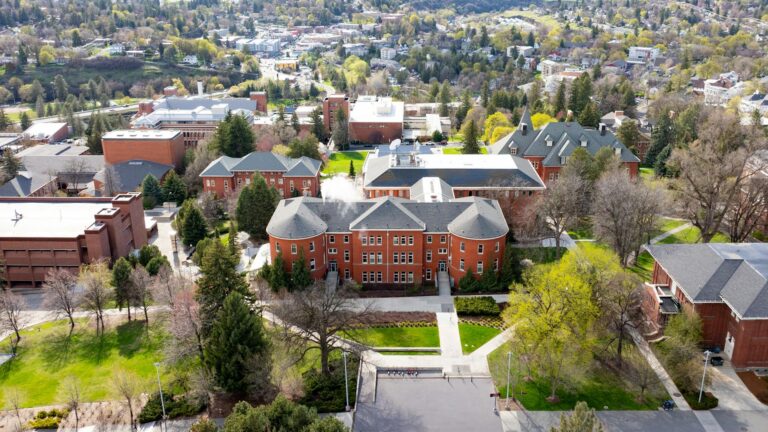
If you’ve been tracking college acceptance rates 2026, you may have noticed something startling: the schools that once seemed like attainable “safety” or “match” options for strong students are now rejecting more applicants than Harvard did a decade ago. Public flagship universities, once considered the accessible alternative to elite private schools, have quietly transformed into some of the most selective institutions in the country. For families who haven’t been closely following this shift, the reality check often arrives in the form of a rejection email from a school they never imagined would say no.
The Most Competitive Colleges Are No Longer Just the Ivies
For generations, the phrase “most competitive colleges” conjured images of Harvard Yard, Yale’s Gothic spires, and Princeton’s stone archways. That mental picture needs a serious update. In 2026, schools like UCLA, UC Berkeley, the University of Michigan, and the University of Virginia are posting acceptance rates that rival, and in some cases beat, several Ivy League institutions.
UCLA’s overall acceptance rate has hovered around 8 to 9 percent in recent cycles, according to data published on the UC system’s official admissions website. For out-of-state applicants, that number drops even further, with some estimates placing it below 6 percent. UC Berkeley sits in a similar range. Compare that to Cornell, which admitted approximately 8.4 percent of applicants in the most recent reported cycle, or Dartmouth at around 6 percent, and you begin to see why many admissions advisors are no longer treating these flagship publics as backup schools.
The University of Michigan Ann Arbor has followed a similar trajectory. Its out-of-state acceptance rate for the Class of 2028 was reported by Inside Higher Ed as sitting in the single digits, a threshold that would have seemed unthinkable even ten years ago. Virginia, Chapel Hill, and Georgia Tech have all tightened their out-of-state pipelines substantially.
What’s driving this? Several converging forces. The expansion of the Common App has made it easier and cheaper for students to apply to more schools. Standardized testing policy changes have removed barriers that once discouraged lower-income or first-generation students from applying broadly. And a surge in overall college-going demographics, combined with increased international interest in U.S. public universities, has flooded application portals with record volumes.
College Acceptance Rate Trends: Why Publics Got So Selective So Fast
Understanding the college acceptance rate trends at public universities requires looking at both the demand side and the supply side of the equation. On the demand side, application volumes have exploded. UCLA received over 145,000 applications for its freshman class entering in fall 2025, per the University of California’s official enrollment data. That number is expected to remain at similar or higher levels in 2026.
On the supply side, public universities are constrained in ways private schools are not. They answer to state legislatures, manage capped enrollment based on physical infrastructure, and are often legally or politically obligated to prioritize in-state residents. UC campuses, for instance, are required by state policy to reserve a significant share of seats for California residents. That means the out-of-state applicant pool, which is typically larger and growing faster, is competing for a much smaller slice of the pie.
This structural mismatch is not temporary. According to a 2024 report from the National Association for College Admission Counseling (NACAC), application volumes at highly selective public universities have grown at nearly twice the rate of private institutions over the past five years. The trend is not reversing. If anything, the continued expansion of test-optional policies and fee waivers for low-income applicants is likely to keep volumes elevated or growing through the end of the decade.
For a deeper look at how these shifts affect your school list, read our guide on how to build a balanced college list when the most competitive colleges include public flagships.
Ivy League Acceptance Rates in Context: A Useful Comparison
It’s worth pausing to put Ivy League acceptance rates in proper context, because the comparison is instructive rather than alarmist. Harvard’s acceptance rate for the Class of 2028 was approximately 3.6 percent, according to Harvard’s official admissions office. Columbia and MIT sit in a similar range. Brown, Penn, and Cornell are slightly more accessible in raw percentage terms, but none of them break double digits.
Now consider that UC Berkeley’s in-state acceptance rate sits around 11 to 12 percent, but its out-of-state rate is closer to 6 percent. For an out-of-state applicant from, say, Ohio or Texas applying to Berkeley, the statistical odds are nearly identical to applying to Cornell or Brown. Yet many of these students and their families are still mentally categorizing Berkeley as a “reasonable reach” rather than a “top reach,” which skews their entire list-building strategy.
The psychological disconnect here is real. The prestige signaling around Ivy League schools has trained applicants to approach those applications with extreme care, highly curated essays, strategic recommendations, and deep research into fit. That same level of preparation is now required for flagship publics, especially for out-of-state applicants who carry no home-state advantage.
One frequently cited Reddit thread in r/collegeresults, which accumulated over 800 comments in early 2026, captured this perfectly. Multiple admitted UCLA students reported GPAs above 4.3 (weighted), SAT scores above 1550, and significant extracurricular leadership, profiles that would be competitive at any Ivy League school. Rejected applicants in the same thread had nearly identical stats. The message was clear: at this level of selectivity, holistic review means the margins are razor-thin and highly unpredictable.
Stanford Acceptance Rate and the Ultra-Elite Tier: Where Does This Leave Students?
The Stanford acceptance rate has now dipped below 4 percent, cementing Stanford alongside Harvard and MIT as part of a truly ultra-selective tier where statistical predictability essentially disappears. Stanford is technically a private university, but it behaves as a public good in many respects, particularly given its geographic and cultural ties to California and its massive financial aid endowment.
For students targeting Stanford, MIT, or the Ivies, the challenge has always been that no profile guarantees admission. What’s changed in 2026 is that this same unpredictability now extends to schools that were once considered achievable goals for top students. The practical implication is significant: students need longer, more carefully balanced college lists than they did five years ago.
Admissions advisors, including those at Brilliant Future College Consulting, are recommending that students treat any school with an acceptance rate below 15 percent as a reach, regardless of whether it’s public or private. That reframing changes the architecture of an entire application strategy, including where students invest essay energy, which schools they visit, and how many applications they realistically submit.
To understand how to approach this strategically, explore our resource on what Ivy League acceptance rates mean for building your broader application list.
What This Means for Your Application Strategy in 2026
So what should students and families do with all of this? Here are the most important practical takeaways for navigating the current landscape:
- Reclassify your schools honestly. If a school’s acceptance rate is below 15 percent for your applicant category, it is a reach. Apply to it because you love it, not because you assume you’ll get in.
- Apply to more true target and likely schools. With flagship publics now occupying the reach tier, many students have lists top-heavy with reaches and very few schools where they have a genuine statistical chance. Correct this imbalance intentionally.
- Invest in your essays for every school. Generic essays don’t cut it at selective public universities any more than they do at Harvard. UCLA’s Personal Insight Questions, Michigan’s supplemental essays, and Virginia’s “Why UVA” prompts all require genuine reflection and school-specific research.
- Understand in-state vs. out-of-state dynamics. If a flagship public is your target, understand whether your residency status works for or against you. In some cases, an in-state flagship is more accessible than a mid-tier private school. In others, the reverse is true.
- Don’t skip the financial aid research. Public universities rarely offer the merit aid packages that many private schools do. Understanding the full cost of attendance and what aid is available is essential before finalizing your list.
For a complete framework on navigating this new era of admissions, read our full guide on how to approach ultra-selective schools including Stanford and top publics.
Frequently Asked Questions
Q: What are the lowest college acceptance rates 2026 among public universities?
In 2026, UCLA and UC Berkeley lead public universities in selectivity, with overall acceptance rates in the 8 to 9 percent range and out-of-state rates that can fall below 6 percent. The University of Michigan Ann Arbor, Georgia Tech, and UVA also report out-of-state acceptance rates in single digits. These numbers place several flagship publics in the same statistical tier as Ivy League schools, making thoughtful list-building more important than ever.
Q: Are college acceptance rate trends getting worse, and will they improve?
Based on current data from NACAC and university enrollment offices, application volumes at highly selective public universities are unlikely to decrease in the near term. Structural constraints like capped in-state enrollment, limited physical capacity, and growing international applicant pools will continue to keep acceptance rates low. Students applying in 2026 and beyond should plan their lists with the assumption that current selectivity levels represent the new normal, not a temporary spike.
Q: How should out-of-state applicants approach public flagship schools given the low acceptance rates?
Out-of-state applicants should treat flagship publics like UCLA, Berkeley, and Michigan as true reaches, applying with the same rigor and preparation they would bring to an Ivy League application. This means investing significant effort in school-specific essays, demonstrating genuine interest where possible, and ensuring the rest of the college list includes schools where admission is more statistically predictable. Working with an experienced college admissions advisor can help you identify the right balance for your specific profile.
The landscape of college admissions in 2026 has shifted more dramatically than most families realize until they’re already in the thick of the process. The good news is that with clear information, honest self-assessment, and a well-constructed strategy, students can navigate even this competitive environment with confidence. The key is starting early, staying informed, and getting the right support.
Ready to build a college list that reflects the real landscape in 2026? Schedule a free 30-minute consultation with Sadia to build your personalized strategy. Together, we’ll make sure your application plan is grounded in current data, honest about the competition, and designed to give you the best possible shot at your dream schools.